Worth the Climb
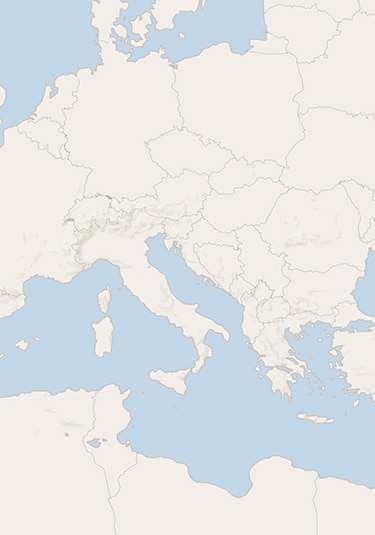
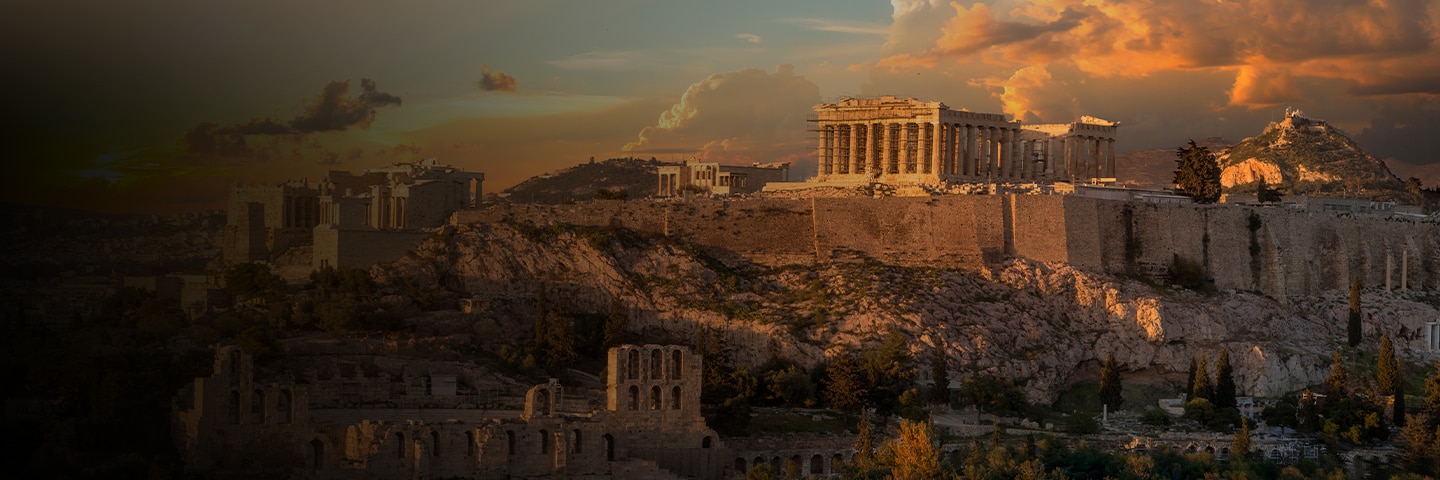
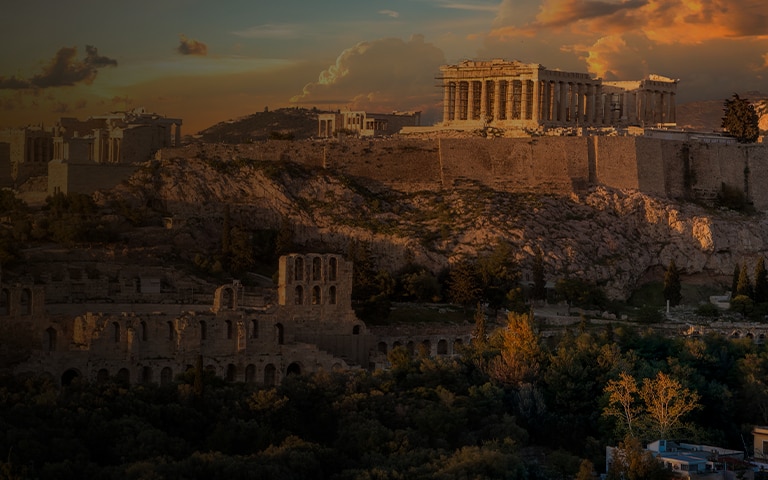
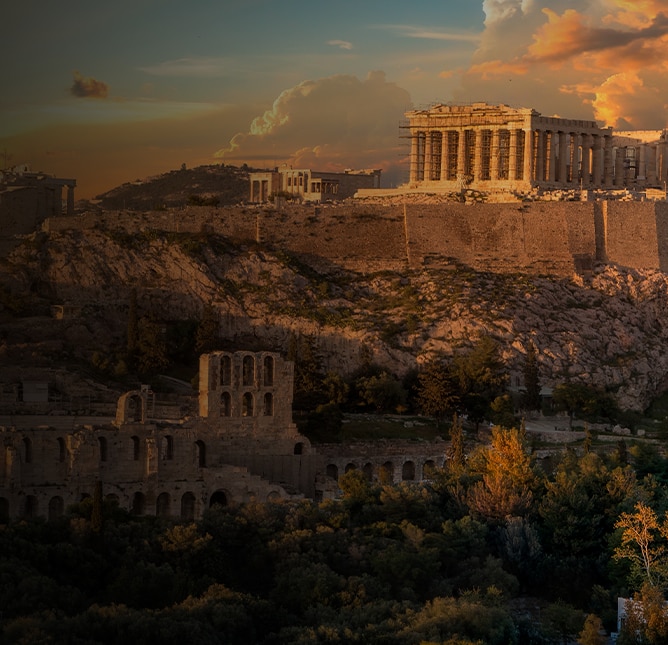
The Acropolis is one of those places you’ve seen so often in photos that you start to believe it might be CGI. But there it was before me, perched 150 meters (500 feet) above Athens, defiantly standing despite wars, weather and poachers.
As Nikos explained, the word Acropolis comes from the Greek words akron (highest point) and polis (city), and it refers to the whole hilltop complex. It’s the sacred plateau that hosts multiple temples and structures that were all constructed during Athens’ golden age in the 5th century BCE.
The Greek Temples Above
Dedicated to Athena, the Parthenon is so famously beautiful and perfect in execution that it’s been copied too many times to count. Washington, D.C., where I live, is a marble love letter to the Parthenon. The Founding Fathers were guided by Greek ideals of democracy and civic virtue, so it’s no surprise that they borrowed heavily from ancient Greek architecture when shaping the capital.
Yet, there’s nothing like the original. Standing before the massive temple and its remaining columns completely dwarf the Lincoln Memorial.
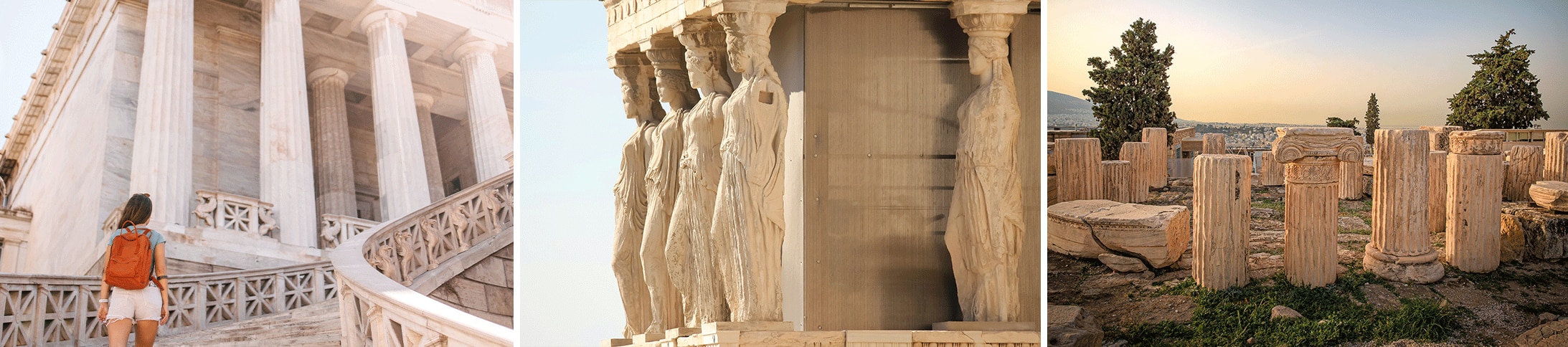
To the side of the Parthenon is the Erechtheion with its six columns carved as women. This temple was built to house multiple sacred sites, including the supposed spot where Poseidon struck the ground with his trident and where Athena caused an olive tree to grow during their mythical contest for the city. There’s also the Temple of Athena Nike, small but mighty, and so perfect on the edge of a cliff it gave me vertigo just thinking about its construction. At the very entrance of the Acropolis is the Propylaea, the monumental gateway that marked the transition from the everyday city to the sacred plateau above. Together, these buildings formed the spiritual and cultural core of ancient Athens.
Return to Earth
A strong gust of wind barreled through the columns, taking quite a few hats with it. I asked Nikos if he thought Zephyrus, the god of the west wind, took them as offerings. He scoffed and said, “That’s not Zephyrus, that’s Athens in August.”
As the tour wound down and I took one last look at the Parthenon gleaming in the afternoon sun, I felt strangely humbled.
I turned to the marble stones, cracked and eternal, and whispered, "Efharistó." It was the only thing to say.